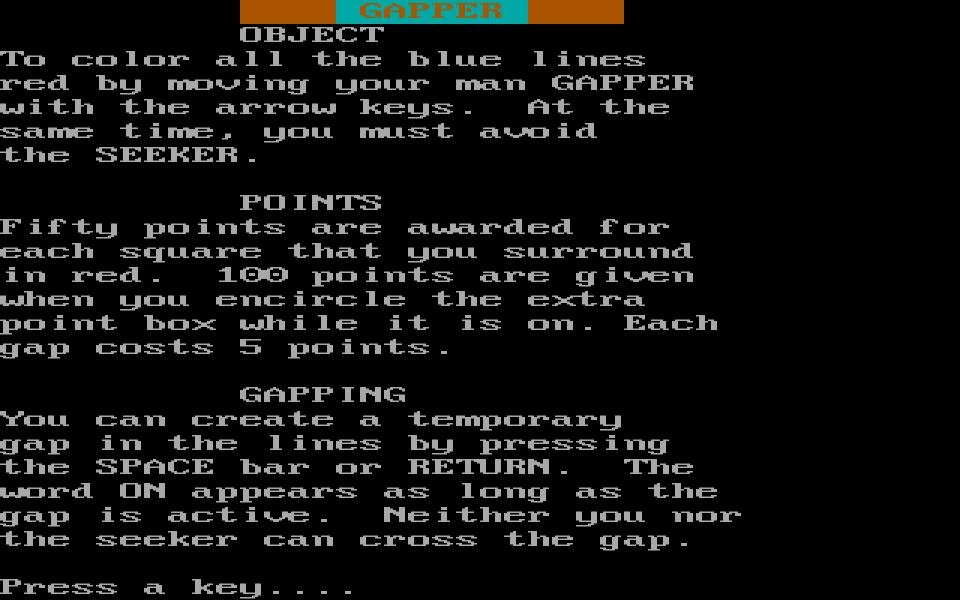
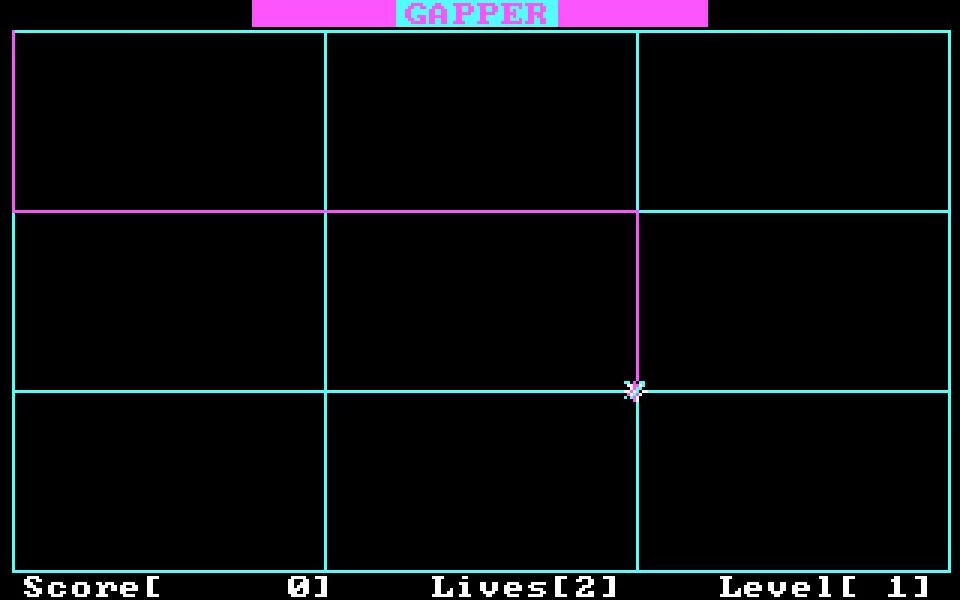
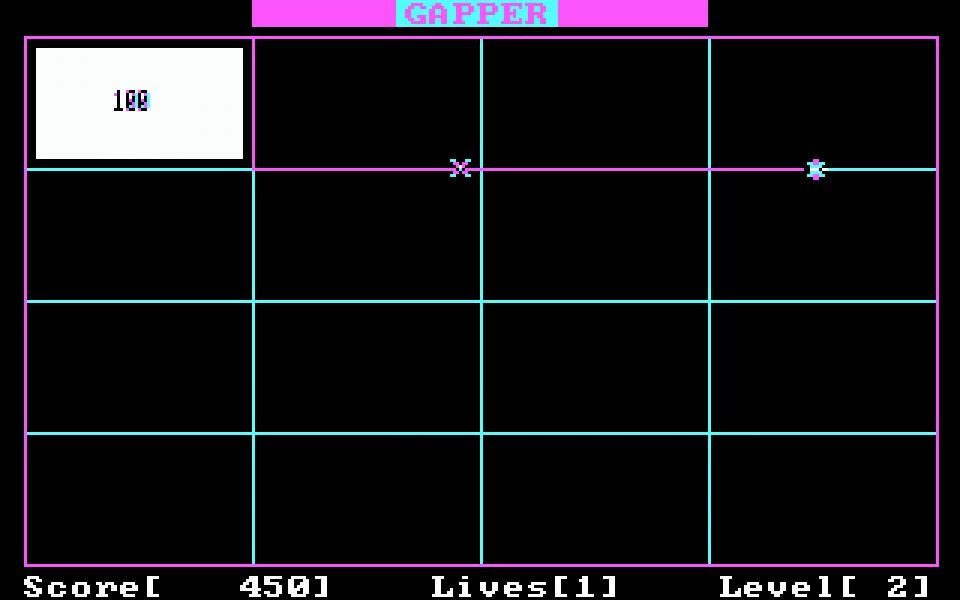
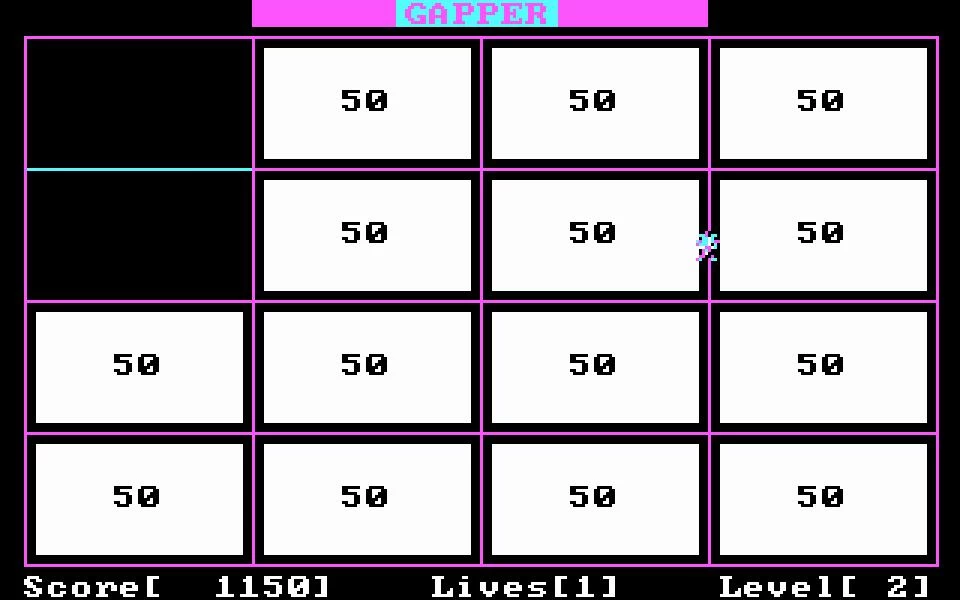
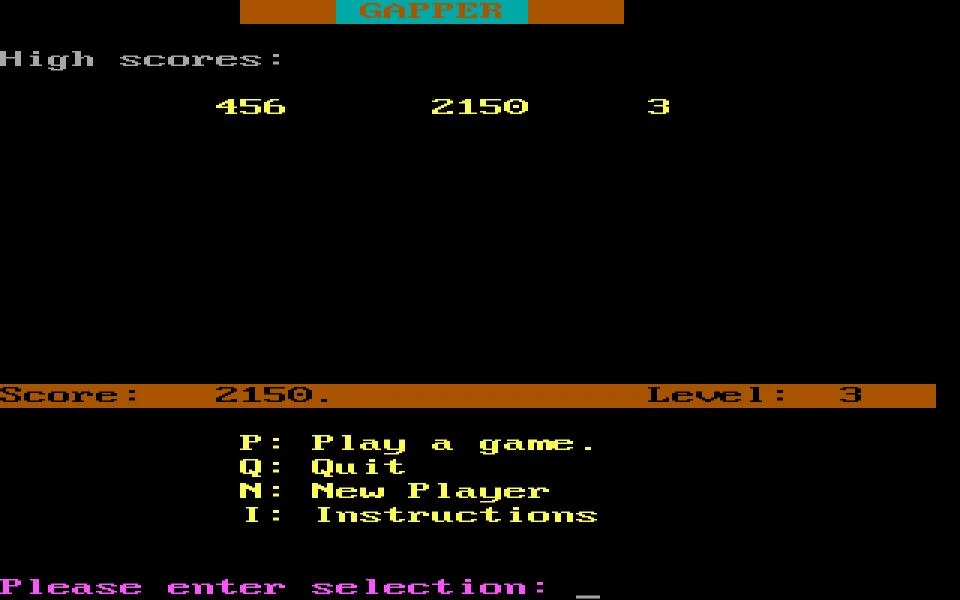
In 1986, Gapper surfaced on DOS for IBM PC compatibles, bringing arcade momentum to the deskbound world of early personal computing. Its premise is simple yet oddly seductive: a small protagonist must navigate treacherous terrain dotted with cavities, hazards, and switching platforms. For players accustomed to longloading adventures, the game felt refreshingly immediate, rewarding brisk reaction time and methodical planning at the same time.
Control uses the classic keyboard layout, with direction keys steering the sprite while a separate jump command times vertical moves. Levels unfold in short sequences that hinge on timing: you slip across narrow edges, clear airborne traps, and sometimes wait for a mechanism to retract before stepping forward. Collectibles matter too, because accumulating them boosts your tally and helps unlock later stages with denser obstacles. Missing the rhythm usually means a reset or a brief loss of progress.
Technically, Gapper leans on the limitations of the era without sounding apologetic. Sprites are blocky, yet crisp enough to read at speed, and motion is tuned so collisions feel fair rather than arbitrary. The engine scrolls in a restrained fashion, keeping the screen from drowning in flicker even on older systems. Color selection shifts subtly between rooms, giving each section a distinct identity while staying compatible with the common CGA and EGA palettes.
Audio plays a supporting role, delivering bright beeps for jumps and crunchy thuds for impacts, plus a small bundle of looping tunes that never overstays. That restraint pairs well with the game’s philosophy: learning comes from repeated runs, not from lengthy tutorials. When you finally connect a tricky maneuver, the feedback is immediate, almost celebratory, and the score nudges you onward. The pacing encourages experimentation with routes, whether you choose bold shortcuts or cautious detours.
Gapper is remembered more by enthusiasts than by mainstream retrospectives, yet it represents a recognizable stride in 1980s PC design. It captures the sweet spot between arcade immediacy and puzzle-minded movement, a blend that helped define how later platformers on DOS would structure their stages. If you track down a copy through vintage libraries, expect a compact adventure that values precision, not spectacle. One credit can vanish quickly, but mastery builds just as fast.
Download game
It is possible that we have multiple downloads available
when different versions exist.