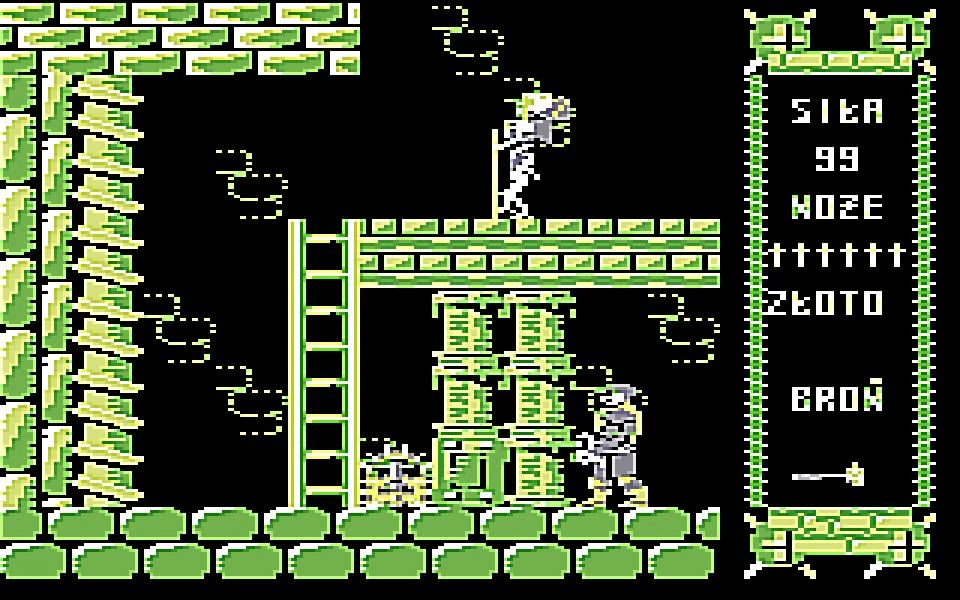
Monstrum, a Commodore 64 title released in 1995, emerges as a curious relic from the twilight of the 8 bit era. By then the machine's glory years were fading, yet determined crews kept pushing its limits with fevered imagination. Monstrum wears its mood on sleeve like a storm cloud: a claustrophobic labyrinth of danger, murky corners, and whispering corridors. Its very existence invites a certain nostalgia for a period when hobbyists stitched whole worlds from sprites, code, and stubborn persistence.
Gameplay threads together exploration and peril in a way that feels designed for a stubborn mouse of a controller. Players skulk through winding halls, dodge looming silhouettes, and hunt for artifacts that unlock deeper levels. Puzzles probe timing and memory, while encounters with traps and echoes press for careful pacing. The rhythm rarely relaxes, and that tension becomes a character in its own right, shaping every decision with a pulse of fear and curiosity. The experience rewards patient, observant play.
Visually Monstrum leans into the era of gritty sprites and chunky palettes. Dark corridors are stitched with intermittent neon and flickering torches, while enemies loom as jagged silhouettes against minimal backdrops. On the audio side, chiptune melodies swirl through the action, punctuated by eerie effects that echo down the pixelated hallways. The combination creates a theater of shadows where every corner feels carved from a different fear, and color becomes a language few other titles mastered so decisively in isolation.
Behind Monstrum lies a microcosm of Commodore 64 culture, where hobbyists traded techniques in magazine columns and fanzines. The game seems to owe much to atmospheric platformers and experimental horror, yet it wears its eight bit heritage proudly, with inventive sprite work and tight timing that exploited every cycle the CPU would offer. Release notes and preserved interviews place it among a handful of titles that kept the unit alive in living rooms long after its peers vanished for collectors.
onstrum survives mostly through emulation, retro collections, and the curiosity of players who wonder what a stubborn eight bit mood could feel like under pressure. Its fame is faint but durable, a reminder that technical limits did not erase ambition; they redirected it into atmosphere, tension, and cunning level design. The title invites modern developers to reinterpret scarcity as a constraint that sharpens ideas rather than dulls them. In that sense, Monstrum remains a stubborn beacon from 1995 itself.
Download game
It is possible that we have multiple downloads available
when different versions exist.