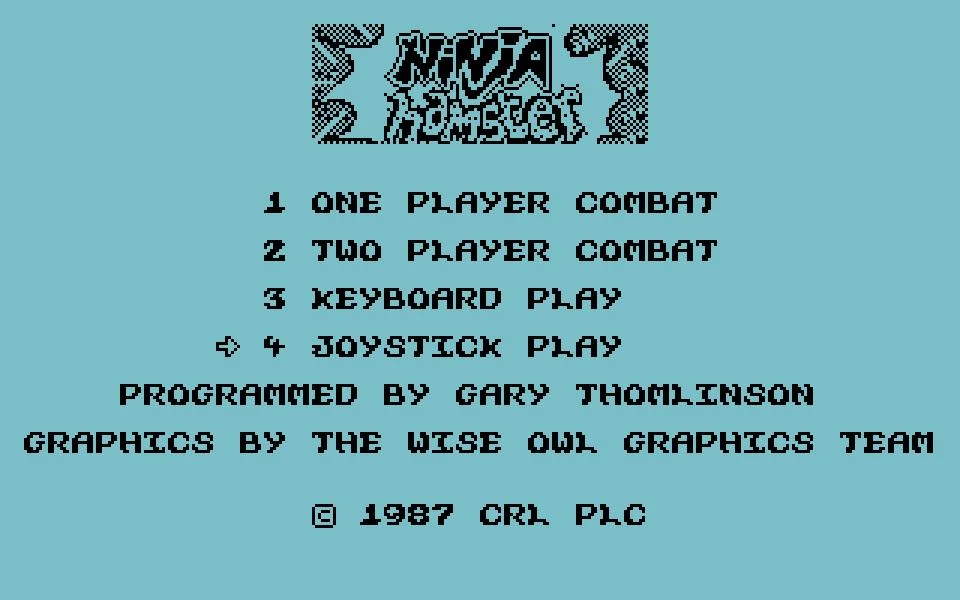
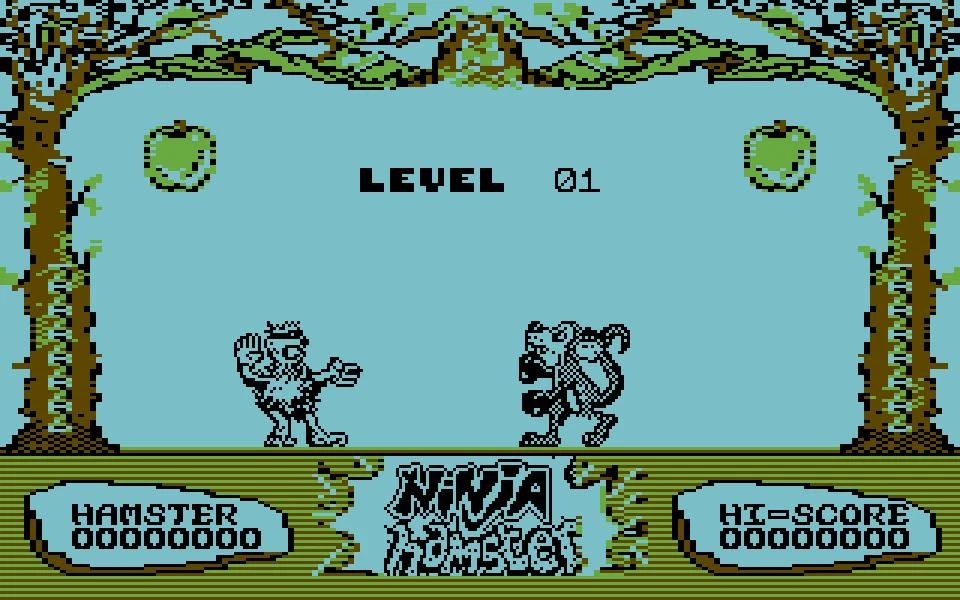
Ninja Hamster is a video game in the action genre and published by CRL Group PLC originally released in 1987. It is currently playable on Commodore 64, Amstrad CPC.
Ninja Hamster arrived on the home computer scene in 1987, offering a brisk dose of platform tension wrapped in a strangely charming premise: a tiny rodent with a secret ninja résumé, sprinting through dangerous districts of traps, sentries, and flickering threats. Instead of aiming for realism, the designers leaned into bold motion and arcade momentum, making the game feel like it was always slightly ahead of your reaction time. For players who were collecting cartridges during that era, it stood out because the protagonist was an underdog character, yet the action played with surprising seriousness. It is often remembered as one of those oddball adventures that still earns respect for its pacing.
In play, you move across short stretches of terrain that demand quick judgment. Jumps must be timed carefully because gaps, spikes, and step-like hazards punish sloppy landings. Enemies roam in patrol routes, and contact usually means instant consequences, so learning their rhythms matters as much as mastering your own. The combat style is simple but effective, relying on ranged attacks and clean positioning rather than elaborate combos. Between confrontations, you scan the screen for pickups and navigation cues, then commit to routes that look safe for only a moment. The later screens escalate with denser obstacle layouts and more punishing enemy spacing.
Visually, the C64 version uses crisp sprite work and clear silhouettes so you can track the hamster’s direction even during chaotic moments. Scrolling keeps the world feeling continuous, while color choices carve out readable foreground danger from background clutter. There is some inevitable hardware flicker, typical of the time, but it seldom ruins visibility when you stay focused on immediate threats. The sound design supports the action with punchy effects for hits and weapon releases, plus lively chiptune themes that shift mood as stages intensify. Together, the audio and animation help build that familiar arcade loop of retry, improve, and press onward.
As for why it persists in memory, it is largely due to its stubborn challenge and its personality. It does not spell everything out; it invites you to learn through repetition, then rewards competence with smoother runs. If you approach it like a rhythm game, anticipating enemy cycles and committing to careful jumps, the experience clicks quickly. Today, it remains easy to revisit through emulation, where its flaws are part of the charm rather than a dealbreaker. In the wider landscape of 1980s action platformers, this title sits as a compact, quirky reminder that the most memorable games often come from unexpected heroes and confident design choices.
Download game
It is possible that we have multiple downloads available
when different versions exist.