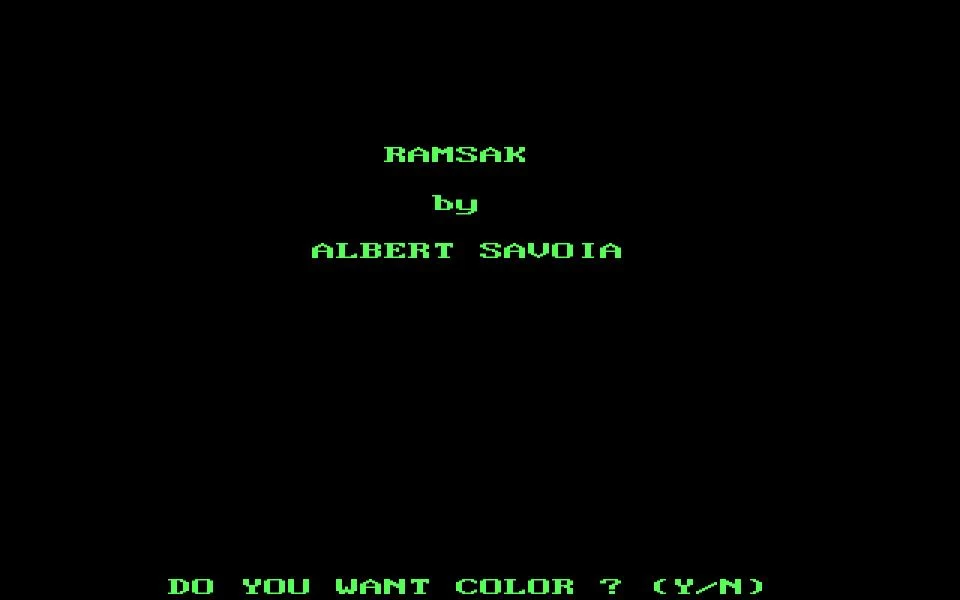
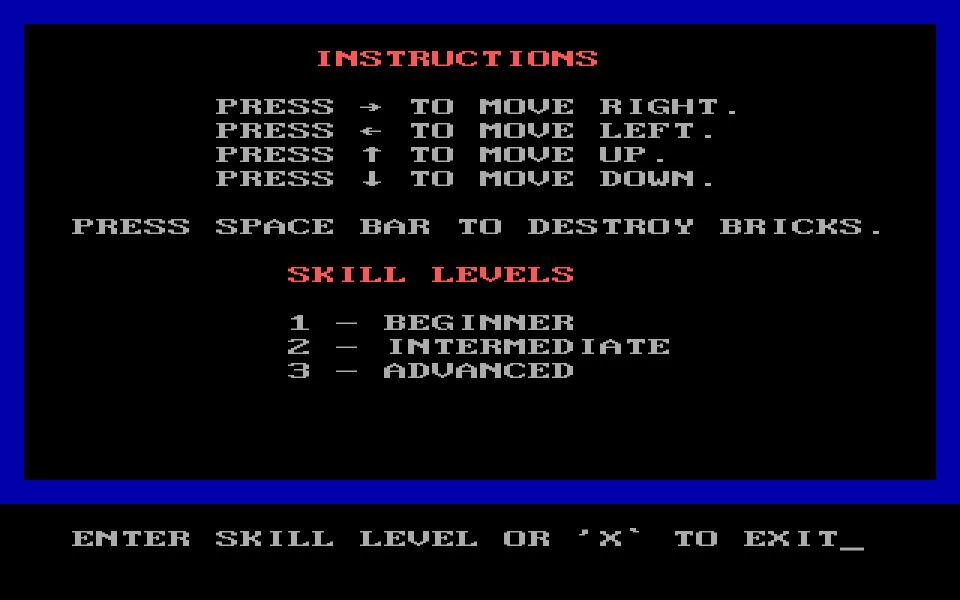
In the early days of home computing, DOS games were all the rage. Among them, RAMSAK stood out as one of the most popular and innovative games of its time. Released in 1982 by Kingsoft GmbH, this game took the world of text adventure to new heights with its dynamic gameplay and captivating storyline.
At first glance, RAMSAK may seem like a typical adventure game, but what set it apart was its unique approach to gameplay. Unlike other DOS games of its time, RAMSAK incorporated a top-down view of the game world, allowing for a more immersive experience. The graphics, while simple by today's standards, were considered groundbreaking for its time and added to the overall aesthetic of the game.
The game's storyline was equally impressive, with players taking on the role of an explorer in search of the legendary city of RAMSAK. As the game progressed, players encountered a plethora of challenging puzzles and obstacles, each one more difficult than the last. What made RAMSAK truly stand out was its non-linear gameplay, where players were free to explore the game world at their own pace and in any order they desired.
One of the most notable features of RAMSAK was its revolutionary enemy AI. Unlike other DOS games of its time, the enemies in RAMSAK were not just programmed to aimlessly roam the game world. They had complex decision-making abilities and could adapt to the player's strategies, making each encounter a unique and thrilling experience.
The game's popularity was also amplified by its advanced text parser system, allowing players to interact with the game world using natural language inputs. This feature, coupled with the game's extensive vocabulary, made for an immersive and realistic gameplay.
RAMSAK's success led to multiple sequels and spin-offs, solidifying its place as a DOS gaming classic. Its influence can still be seen in modern games, with its top-down view and non-linear gameplay inspiring many titles in the adventure genre.
Download game
It is possible that we have multiple downloads available
when different versions exist.